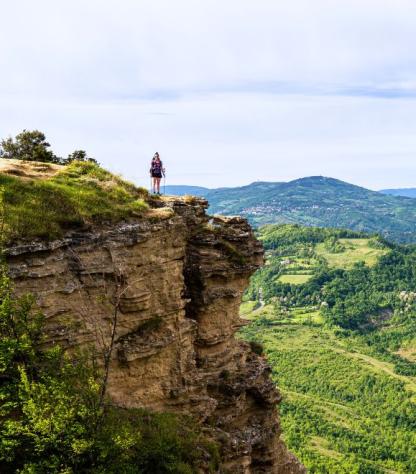
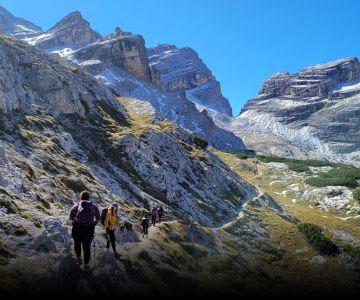
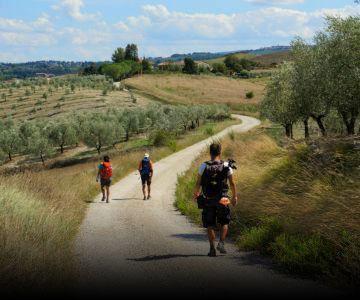
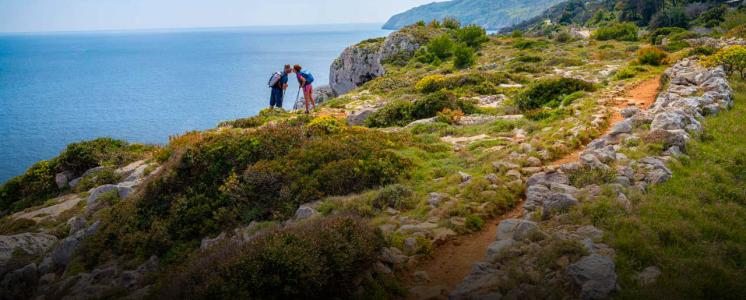
Panoramic cliff-top view along the Via degli Dei trail in the Apennine mountains

Via Degli Dei

Bologna to Florence

From Bologna to Florence on ancient Via Flaminia

The Gods along the Via Degli Dei are the mythologically named mountains you meet on you'll meet along the way. They have watched for millennia over the ancient Military Flaminia Roman Road, now one of our travelers' favorite journeys.

The Via degli Dei connects Bologna - a beautiful, generous city with a rich gastronomic scene - to Florence. While the panoramic view on the cradle of Renaissance from the top of Fiesole looks like something straight out of a painting, it won't be the most surprising part of your journey.
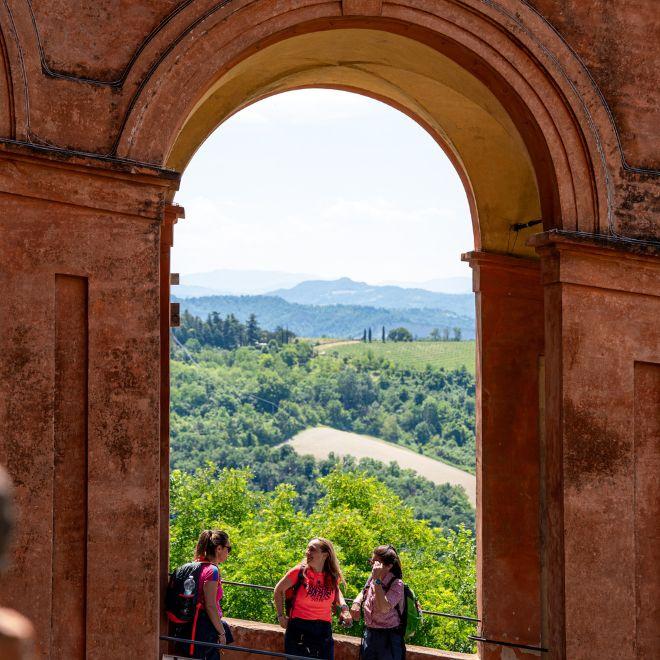


View over the Appennines framed by a historic arch along the Via degli Dei route

Expect Roman roads, military graveyards nestled in the woods, fossils of prehistoric shells in the mountain rock and mysterious legends. Discover oases filled with rare species of water plants, suspended bridges, and Medicean castles.


Top Trips

The two Neptunes


The Via degli Dei connects two gods
Neptune Fountain in Florence, iconic landmark at the end of the Via degli Dei walk

The Via degli Dei connects two fountains - one in Bologna and the other in Florence, both dedicated to the same God. 

Neptune, the God of the Sea, marks the beginning and the end of the route - the first God of the many the Cammino is dedicated to. 

Read more about Neptune and the Via degli Dei in our blog.

The Monte Adone


The iconic signature of the Via degli Dei
Aerial view of forested ridges and valleys along the Via degli Dei pilgrimage route

Monte Adone is located in the heart of the middle Bolognese Apennines along the Via degli Dei, situated in the southeastern part of the municipal territory of Sasso Marconi.

This area is characterized by dry meadows and rare Mediterranean trees such as holm oak and manna ash.

The summit of Monte Adone, rising to 654.44 meters above sea level, is accessible from the charming village of Brento, a hamlet of Monzuno, and located on its eastern slopes. There are several natural and panoramic attractions at the summit, including the enchanting Grotte delle Fate (Fairy Caves), Grotticella, and Cunicolo Pozzo (Pit Tunnel).

Additionally, Monte Adone is the source of various streams that serve as tributaries of the Savena River.

Monzuno


Mount of Jupiter or Juno
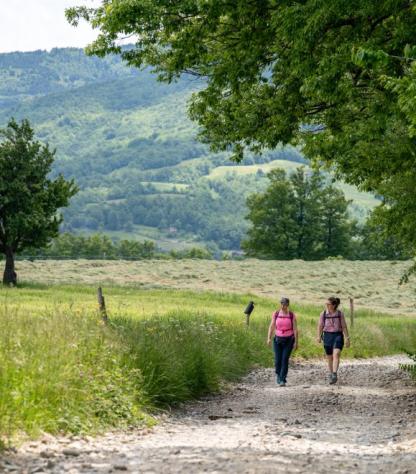
Rolling hills and rural villages along the Via degli Dei between Bologna and Florence

In the area, there are numerous traces of the area's pagan past.

Local place names reference deities of the Roman religion, and the name of the village itself may derive from Mons Jovis (Mount of Jupiter), or from Mons Junonis (Mount of Juno).
However, it is more likely that the name simply derives from the Latin "mons" meaning mountain, as in other towns like Monzone, Montione.

The Monte Senario


The sacred hermitage
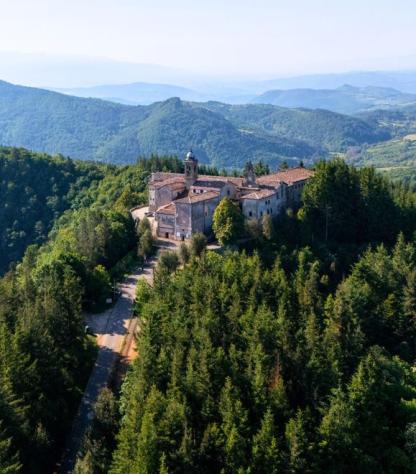
Mountain monastery surrounded by forests along the Via degli Dei trail

According to local legend, this mountain roughly nine miles from Florence would echo with sounds from its caves whenever the wind passed through.

Because of this echo, the mountain has been called Sonario or Sonaio since ancient times, although it is more commonly known as Monte Asinario, due to a linguistic corruption where the letter "a" was added, and the "o" was transformed into "i".

As well as views back towards Florence and its Tuscan surrounds, the Via degli Dei camino is made even more special by the Servite monastery that has sat on the hillside since 1245. Known as the hermitage of Monte Senario, it has been extended across the centuries but remains a step back into times of ancient worship.

Highlights

  • Begin and end the journey in two of Italy's most beautiful cities
  • A route through forests and mountains named after Gods
  • Explore the legends of Mugello and the territories you will cross
  • Discover continuous surprises, from a hidden cemetery deep in the woods, to a garden of poisonous and medicinal plants
  • Enjoy the unforgettable view of Florence from the heights of Fiesole – the balcony of Tuscany

Frequently Asked Questions

How long is the Via degli Dei from Bologna to Florence?

The Via degli Dei covers approximately 130 km, typically walked in 5 to 6 stages over 8 days with SloWays. Each stage ranges from 20 to 25 km, taking you through a rich mix of Apennine mountain trails, ancient dirt roads, chestnut forests, and occasional paved sections - with the unforgettable panorama of Florence waiting at the end.

How difficult is the Via degli Dei?

The trail is rated moderately difficult (Level 3) in our activity grading. The route involves significant ascents and descents along the Apennine ridgeline, so a good level of fitness and some prior long-distance hiking experience are recommended. If you prefer a gentler pace, our Via degli Dei Easy option covers the same route with lighter daily distances. For a full picture of what to expect, read our blog The Via degli Dei: A Journey from Bologna to Florence on Foot .

What accommodations are included in a SloWays Via degli Dei package?

All our packages include carefully selected B&Bs and small hotels with private bathrooms - chosen for their character and comfort after a long day on the trail. We handle all bookings in advance so you can focus entirely on the walk. Expect warm hospitality, local breakfasts, and a genuine taste of the communities you pass through.

How is the Via degli Dei waymarked?

The route is well-signed with a distinctive yellow and black logo displayed on markers placed at regular intervals throughout the trail. Navigation is straightforward for self-guided walkers, and SloWays also provides detailed route notes and GPS tracks via our mobile app with offline maps - so you always know exactly where you are, even without a signal.

What should I pack for the Via degli Dei?

The essentials: well broken-in trekking shoes, moisture-wicking and layerable clothing, a hat, sunscreen, and a refillable water bottle. We also recommend a compact first-aid kit, a headlamp or small flashlight, and a daypack comfortable enough to carry your personal items for 6-8 hours. Your main luggage is transferred between accommodations each day, so you only carry what you need on the trail.

What is the best time of year to walk the Via degli Dei?

The best months to walk the Via degli Dei are generally spring and autumn, when temperatures are milder and the Apennine landscapes are especially enjoyable. Summer can be warmer, so early starts and plenty of water are recommended, while winter may bring colder weather and less predictable trail conditions. If you're planning your trip, these shoulder seasons usually offer the best balance of comfort, scenery, and walking conditions.

Our trips


Wanderlust Nominee Best Specialist Tour Operator 2025
Wanderlust
Nominee Best Specialist Tour Operator 2023
Change currency:

We accept:

VISA MASTERCARD

We accept:

VISA
MASTERCARD
FTO ATTA member
RePower Travelife
ISO Partner ISO Partner
FTO ATTA member RePower Travelife ISO Partner ISO Partner

Touroperating
S-Cape Countryside Travels srl
Borgo Allegri 16R
50122 Firenze FI
P. IVA 05227330486

 
© 2026 SloWays. All rights reserved.
Touroperating S-Cape Countryside Travels srl Borgo Allegri 16R 50122 Firenze FI, Italy
VAT Nr 05227330486
extraSmallDevice
smallDevice
mediumDevice
largeDevice
largeDevice
largeDevice